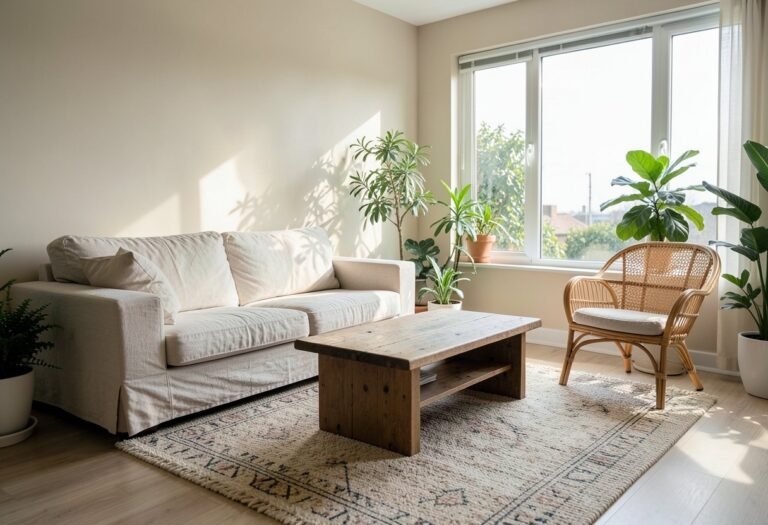
Japandi Floor Lamp: 9 Easy Picks for a Little Corner
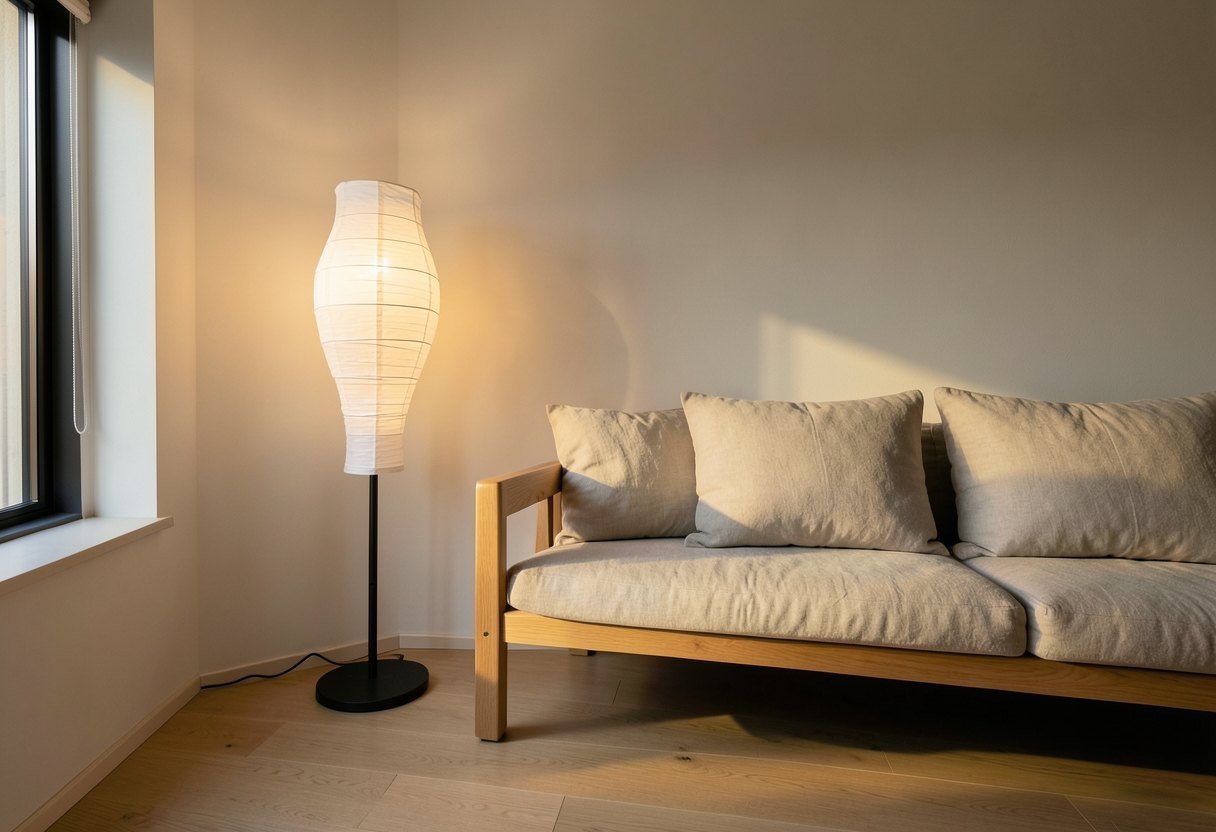
A dark corner can make a calm room feel unfinished. A japandi floor lamp fixes that without adding clutter: one slim shape, one soft shade, and a warm pool of light where you actually sit.
This guide gives you nine easy picks, from paper lanterns to bamboo poles and thin brass arcs. You will also get the height, shade and bulb rules that make a japandi floor lamp look right, plus a short section on building one yourself.
Table of Contents
Table of Contents
How a Japandi Floor Lamp Differs From a Regular One
A japandi floor lamp is quiet on purpose. It has a thin stand, a plain shade and a natural material, usually wood, bamboo, paper or matte metal. Nothing is pleated, fringed or shiny.
The shade matters most. One lighting retailer’s guide names simple drum or lightly tapered shades in linen, cotton or washi paper as the most authentic choice, and advises against pleated or ruffled styles (Montreal Lighting). That matches the style itself: Japanese restraint plus Scandinavian warmth.
If you are still building the rest of the room, our Japandi furniture guide shows the shapes that pair best with a slim japandi floor lamp.
Paper and Washi Shades That Glow Softly
Paper is the easiest way to get a true japandi floor lamp look, because the light comes out diffused and almost shadowless. Choose an LED bulb so the paper stays cool.
1. The tall paper column
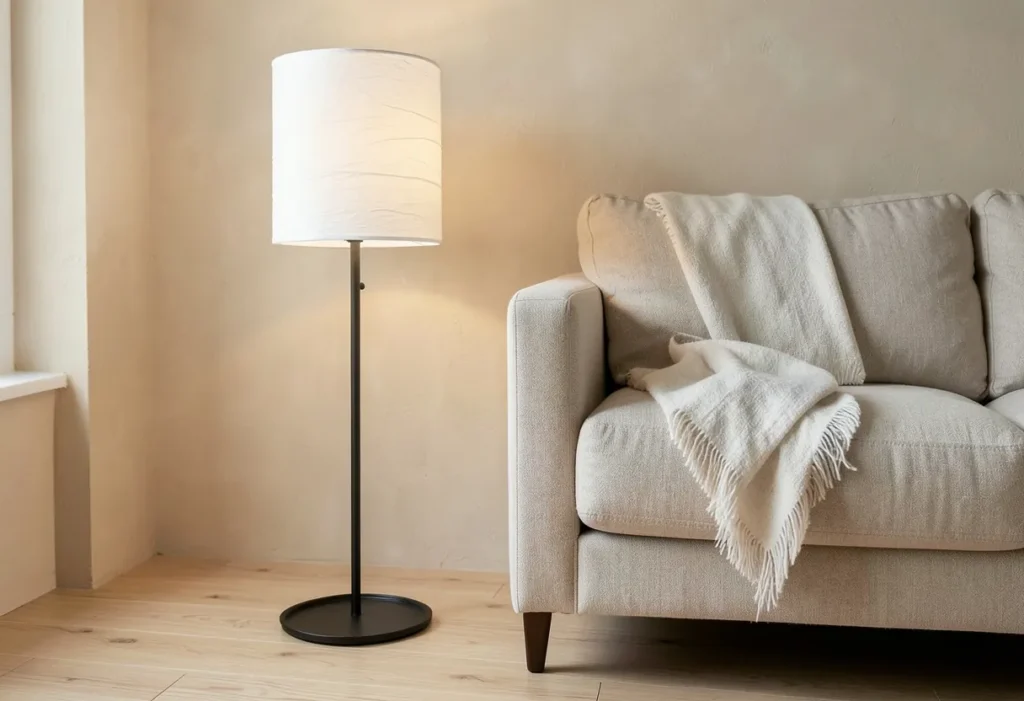
A cylinder of white washi on a thin black base is the classic. Expect about $40-120 for a ready-made japandi floor lamp like this, and it works in nearly any corner. Look for rice paper or washi with a visible fiber, because plain white plastic film looks flat and cheap once the bulb is on. The base should be heavy enough that a pet or a swinging door cannot tip it.
2. The rounded lantern on a slim pole
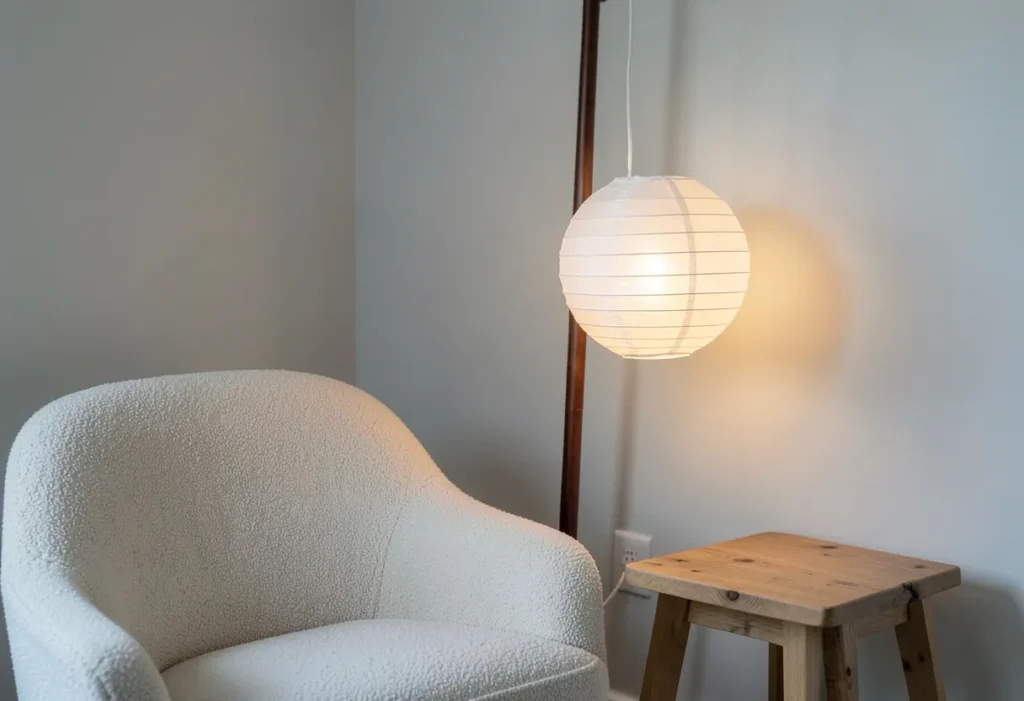
A globe or egg-shaped paper shade sits on a stem. It softens a square room and suits a bedroom reading chair well. This japandi floor lamp style costs about $50-150 in most stores. Keep the shade between 14 and 18 inches wide so it feels like a soft moon beside the chair and not a giant ball in the room.
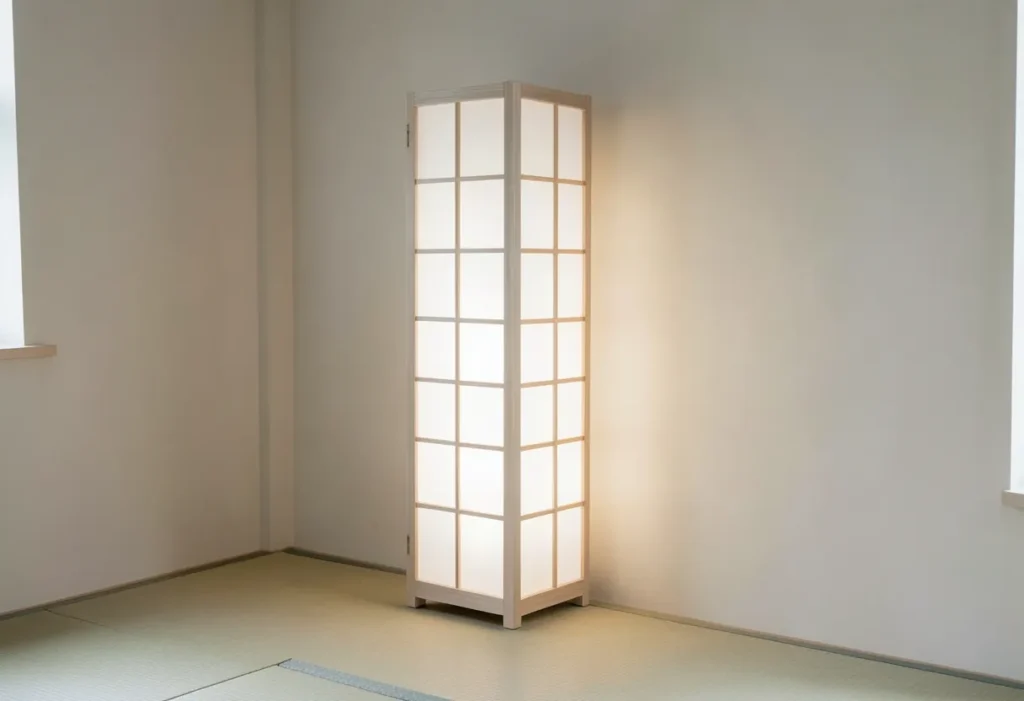
3. The shoji-panel lamp
Wood strips and paper panels make a tall, boxy lamp that looks like a small sliding door. It is the most Japanese of the nine and a good project if you like woodworking. The grid of thin slats casts a gentle pattern on the wall, so place it where that shadow can be seen, like a bare plaster wall beside a low bed.
Wood and Bamboo Frames With Quiet Grain
Natural wood brings the Scandinavian side. Pale oak, ash and bamboo keep the japandi floor lamp light in tone, so it blends with the wall instead of fighting it.
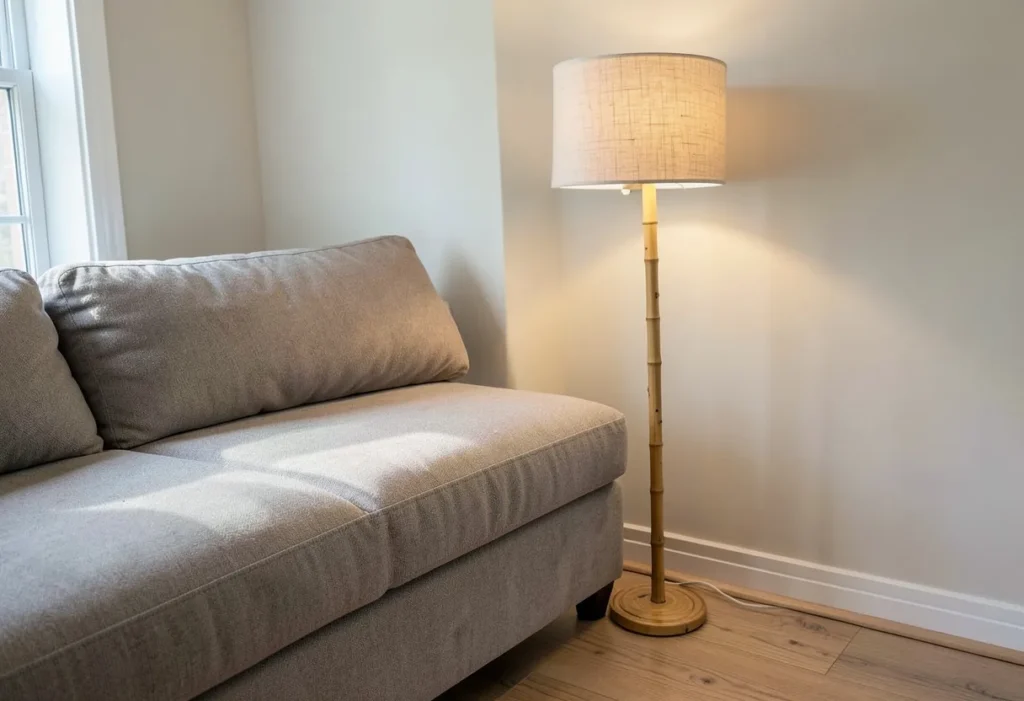
4. The bamboo pole lamp
A slim bamboo stem with a linen drum shade is light, affordable and easy to move. Retail guides suggest about 62 to 68 inches tall beside a low sofa for ambient and reading light, and bamboo lamps hit that range well. Pair the stem with a plain drum no wider than 16 inches, and the whole japandi floor lamp stays visually light even in a narrow hallway or reading nook.
5. The oak tripod
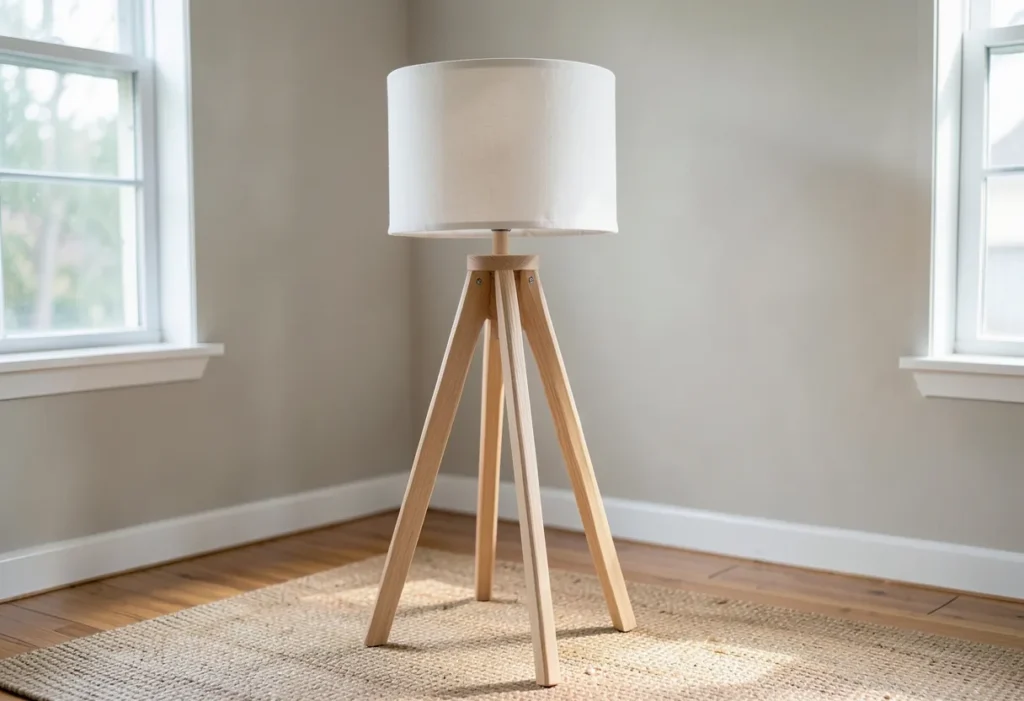
Three angled legs and a cotton shade make a stable japandi floor lamp for open floors. Budget about $80-220, depending on the wood and whether it is solid. A tripod also looks good from every side, so it can stand in the middle of a room, behind a daybed or beside a window without needing a wall to lean on.
6. The wood-tone column with a white cotton drum
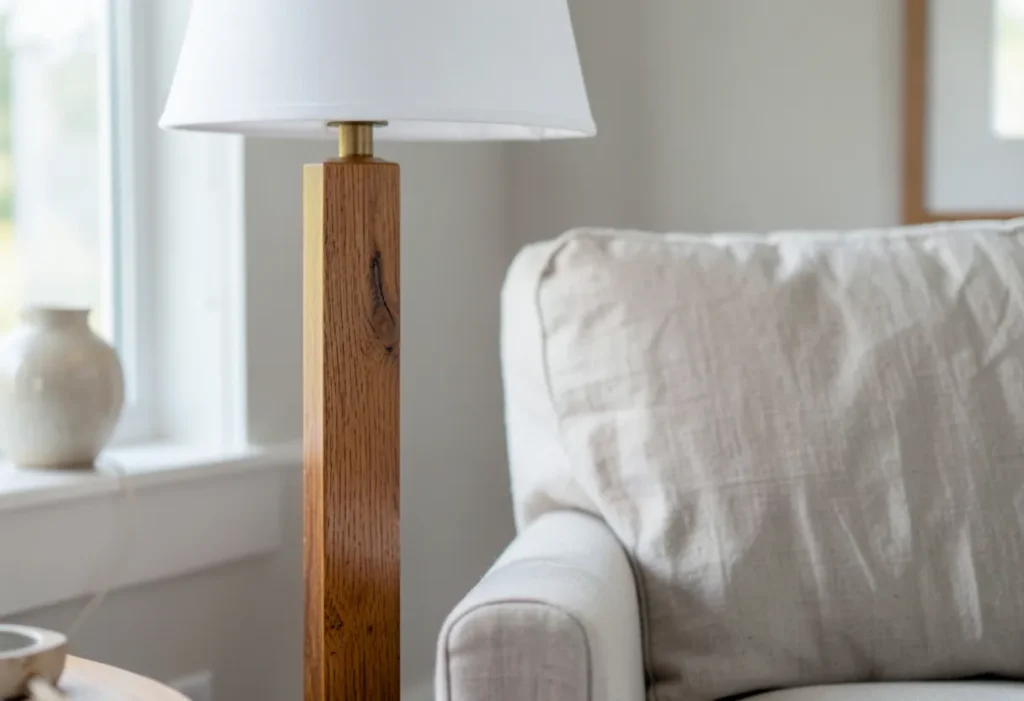
Retailers list simple wood-tone floor lamps around 65 inches tall with a white cotton shade, such as this 65-inch wood-tone model. It is plain, and plain is the point of a japandi floor lamp. If your furniture is mostly pale, a slightly warmer wood tone here gives the corner a little depth without breaking the calm palette.
Slim Metal Arcs for Tight Corners
Not every room has space for a wide base. Thin metal in matte black or soft brass keeps the japandi floor lamp light and almost invisible.
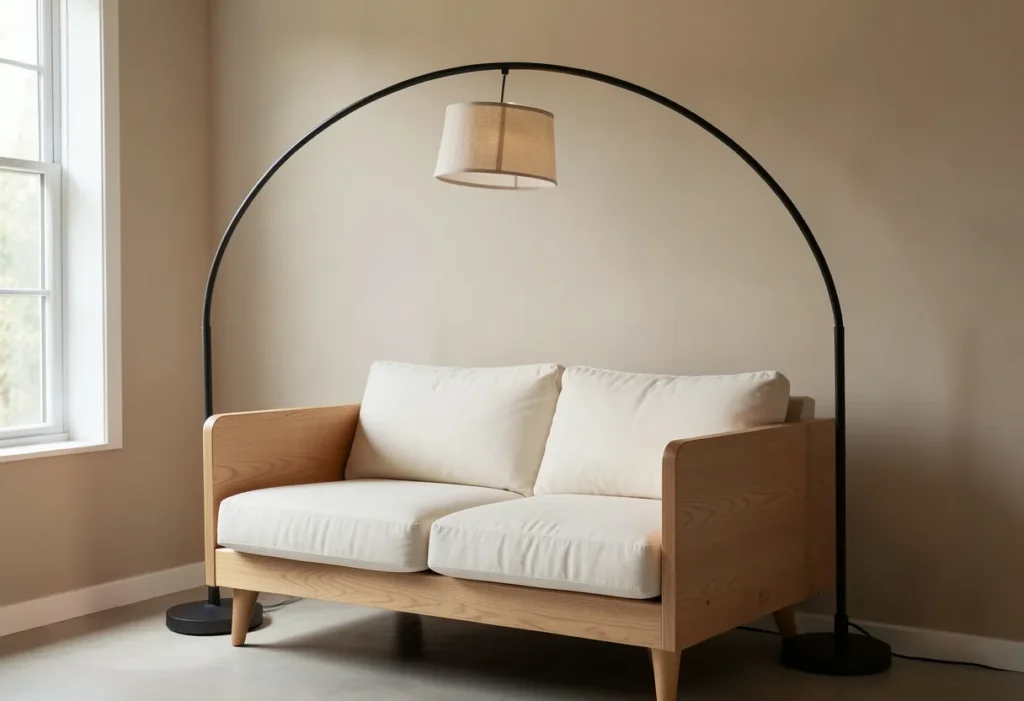
7. The low arc over a sofa
An arc reaches over the seat so you do not need a side table. Pair it with a linen drum or a small paper dome. Plan on about $70-200. Check that the arc clears the seat by at least 18 inches, otherwise it will feel like it is in the way of your head.
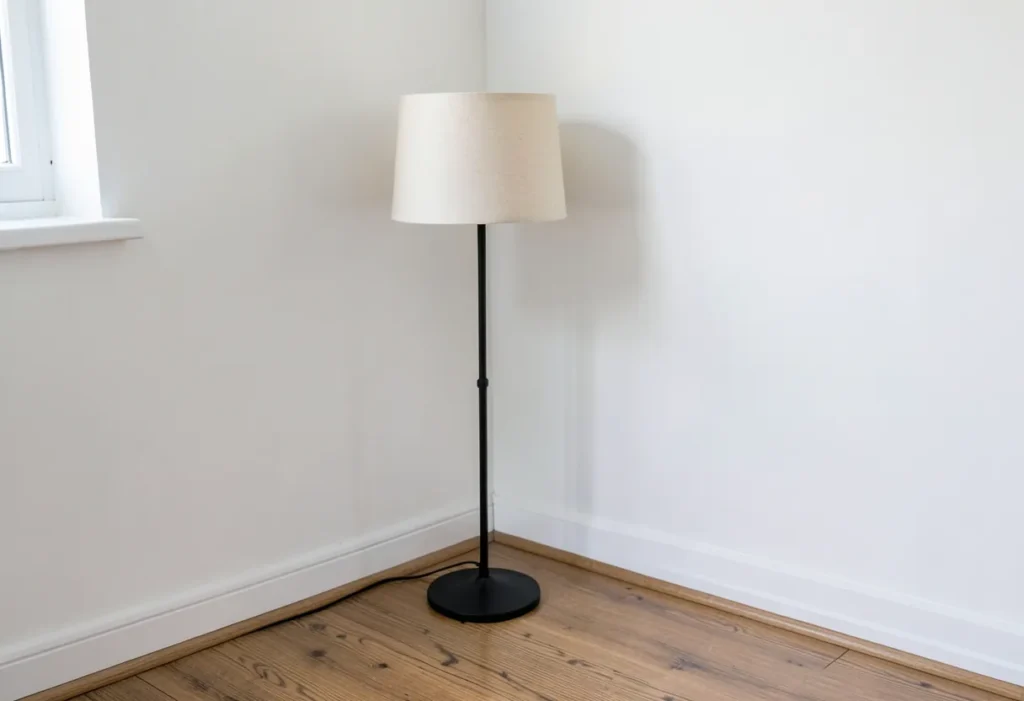
8. The slim black stem with a linen drum
This is the minimalist’s japandi floor lamp: a hairline stem, a heavy-enough base, and one plain shade. It is the safest pick for renters because nothing about it will date. Put it next to a plain wall and leave the surrounding floor empty, because this japandi floor lamp looks best with space around it.
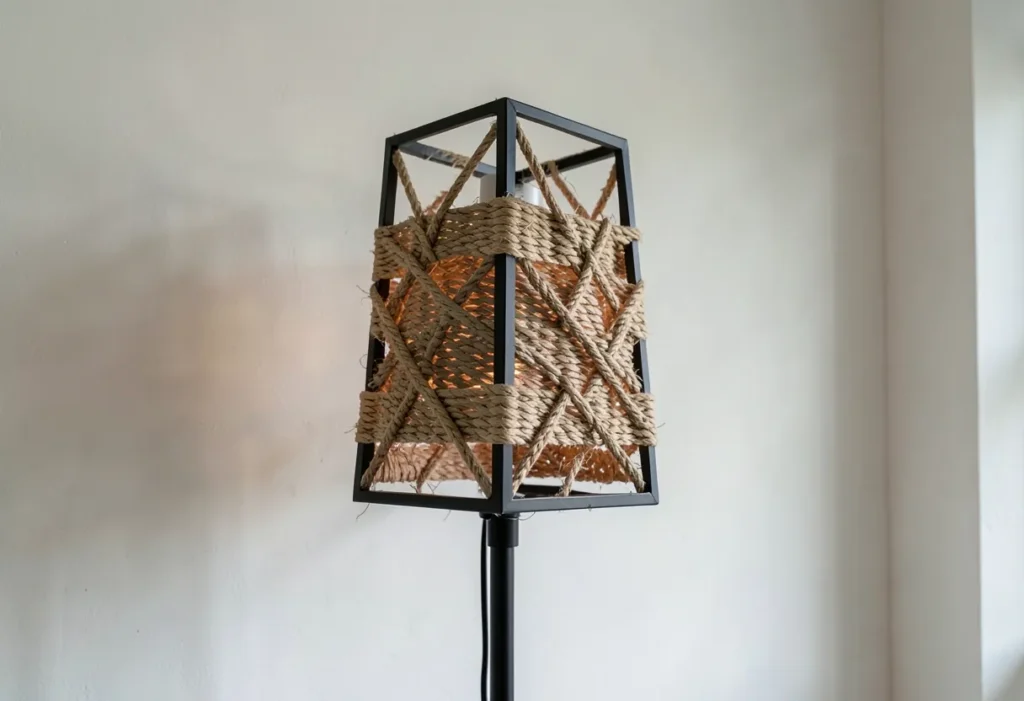
9. The woven-cord geometric frame
A black frame wrapped in natural cord reads as craft rather than factory. One UK retailer sells a woven-cord model it describes as suited to minimal rooms (Lighting Styles), and the idea works in any size. Choose natural cord, not colored rope, so it stays in the same earthy palette as your baskets and ceramics.
Which Height and Bulb Suit a Japandi Floor Lamp?
Most living rooms do well with a japandi floor lamp between 55 and 68 inches tall. Go lower if the ceiling is under 8 feet, and taller only if the lamp stands behind a big sofa.
For the bulb, use warm white. Several lighting guides recommend 2700K to 3000K for this style (Lighting Collective). Anything cooler flattens the wood and makes paper look gray. A dimmer switch or a dimmable bulb is a cheap upgrade that makes every japandi floor lamp more useful at night.
Mistakes That Make a Japandi Floor Lamp Look Off
Most problems come from small choices. A glossy chrome base, a busy patterned shade or a cold white bulb can undo an otherwise calm room in a minute.
Another common mistake is size. A japandi floor lamp that is too wide crowds the corner, and one that is too short looks lost next to a sofa. Measure the sofa arm height and the corner width before you buy, and leave about a foot of empty floor around the base so the shape can breathe.
Color is the last trap. Stay with warm whites, soft beiges, light wood and one dark accent, and a japandi floor lamp will blend with almost any neutral room. Avoid bright colored shades, because they pull the eye away from the quiet look you are building.
Finally, watch the cord. A black or white cord running across a pale floor is the one thing that spoils the minimal look, so tuck it along the baseboard or behind a plant, and choose a lamp with a cord switch you can actually reach.
Where to Place It for the Best Light
Put a japandi floor lamp where light is missing, not where it is convenient. Good spots are beside a reading chair, in the dark corner behind a sofa, or next to the bed. One guide suggests using a tall floor lamp in an underused dark corner to add depth, and that tip holds up in small rooms.
Layer it with other soft sources. A table lamp on a sideboard and a pendant over the dining table give the room three heights of light, and the japandi floor lamp supplies the middle one. A natural fiber rug underneath helps too; see our Japandi rug guide for sizes and materials.
Can You Build a Japandi Floor Lamp Yourself?
Yes, and two small-channel videos show the idea well. One walks through a shoji lamp about six feet tall in walnut and maple, with a removable top for changing the bulb (watch the shoji floor lamp build). It is more advanced, so give it a weekend.
For a gentler start, another video shows a paper shoji lampshade that is easy to make (watch the paper lampshade). Pair it with a ready-made stand and you have a custom japandi floor lamp for the cost of paper, glue and a bulb. Always use an LED bulb inside paper, and keep paper well away from heat.
Japandi Floor Lamp Questions Readers Ask
What shade is best for a japandi floor lamp?
Linen, cotton and washi paper are the best choices. They are plain and diffuse light softly. Skip pleats, fringe and glossy fabric.
How tall should a japandi floor lamp be?
About 55 to 68 inches suits most rooms. Beside a low sofa, 62 to 68 inches gives good reading light without glare.
What bulb should I use in a japandi floor lamp?
Choose a warm white LED, between 2700K and 3000K. Dimmable is better, since you can lower it in the evening.
Can a japandi floor lamp work in a small room?
Yes. A slim stem or a bamboo pole takes almost no floor space, and a japandi floor lamp can replace a bulky side table lamp.
Is a japandi floor lamp expensive?
Not necessarily. Many look good at about $40-120, and a DIY japandi floor lamp can cost less. Solid wood and designer pieces cost more.
Choosing the One That Stays
Pick the shade first, then the stem, then the height, and your japandi floor lamp will look like it belongs. If the kitchen is next on your list, our Japandi kitchen ideas carry the same calm into the room where you cook.