18 Stunning Japandi Kitchen Ideas You’ll Love in 2026
For the first time in nine years, light wood stains have taken the top spot over white cabinets, according to NKBA’s 2026 Kitchen Trends Report, with white oak alone specified in 51% of professional kitchen projects. A japandi kitchen is exactly that shift already assembled: warm wood, quiet color, and nothing extra on the counters.
The challenge is most kitchens are full of appliances, cords, and clutter that fight the calm this style depends on. This Home Decor Beauty guide covers 18 ideas, a materials-matching table, and the layering rules that work whether you’re renting or renovating. No demolition required for most of it.
Key Takeaways
• Clear the counters first, negative space matters more than any single purchase in this style.
• Light wood stains now outrank white as the top kitchen cabinet finish (NKBA 2026 Kitchen Trends Report).
• Our picks start at $15 and build to a full $600 cabinet refresh.
• The Home Decor Beauty rule: one wood tone, one metal, everything else neutral.
Table of Contents

What Actually Makes a Kitchen Read as Japandi?
As of 2026, 59% of kitchen design professionals say wood grain cabinetry is growing in popularity, surpassing painted finishes, according to NKBA’s 2026 Kitchen Trends Report. This style leans entirely into that shift: visible wood grain, muted color, and function-first layouts over decorative flourishes.
Ma is the Japanese design principle of intentional empty space, in a kitchen, that means clear counters, not just clean ones. A counter with three items styled sparsely reads as japandi; the same counter with ten small appliances doesn’t, no matter how tidy they’re arranged.
My own kitchen had a coffee maker, toaster, knife block, and fruit bowl all fighting for counter space. Moving two of them into a cabinet did more for the room’s calm than any decor purchase could have. Clear first. Decorate second.
Empty counter space is the decor. Not the absence of it, and that distinction is the single hardest habit to build when you’re used to a busier kitchen.
Which Materials Work Best in a Japandi Kitchen?
In 2026, white oak leads every wood species specified by kitchen professionals at 51%, with light-to-medium stains preferred over dark, reports NKBA’s 2026 Kitchen Trends Report. Kitchens add one complication no other room has, constant heat, moisture, and food contact, which narrows the safe material list considerably.
Sealed wood, stone, and ceramic all handle kitchen conditions well. Unsealed wood cutting boards left wet, and untreated wicker near the stove, both degrade fast. Check the finish and placement before you commit to a piece.
The table below matches ten materials to heat and moisture tolerance, the practical detail most style roundups skip entirely.
| Material | Best Use | Heat/Moisture Tolerance | 2026 Cost | Difficulty |
|---|---|---|---|---|
| White oak cabinet fronts | Cabinetry | High (sealed) | $150–$400/panel | Hard |
| Sealed teak cutting boards | Countertop display | High | $20–$45 | Easy |
| Unglazed stoneware | Canisters, bowls | High | $15–$45 | Easy |
| Matte black hardware | Cabinet pulls | High | $3–$8/pull | Easy |
| Linen tea towels | Texture accent | Medium (wash often) | $10–$20 | Easy |
| Rattan pendant shade | Overhead lighting | Medium (away from heat) | $40–$100 | Medium |
| Natural stone counter | Work surface | High | $60–$150/sq ft | Hard |
| Open wood shelving | Display storage | Medium (sealed only) | $40–$90 | Medium |
| Bamboo utensil holder | Countertop tool | Medium | $10–$20 | Easy |
| Ceramic pendant lights | Overhead fixture | High | $50–$120 | Medium |
Cabinet and Storage Japandi Kitchen Ideas
A minor kitchen remodel recoups roughly 112.9% of its cost at resale, the strongest ROI of any interior project, according to Zonda’s 2025 Cost vs. Value Report, higher than a full upscale remodel’s 36% return. These seven cabinet-level ideas capture most of that value without a full renovation.
1. Wood-Front Cabinet Panels
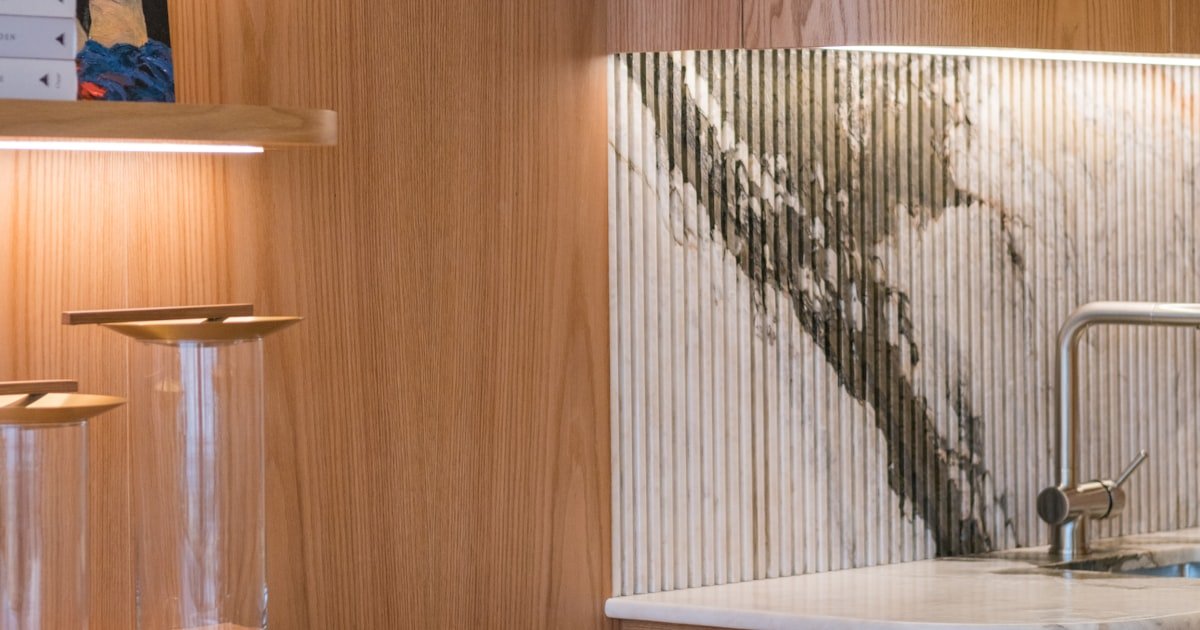
Replacing painted cabinet doors with light oak or ash wood-front panels ($150–$400 per panel in 2026) is the single highest-impact upgrade short of a full remodel. Choose a matte, low-sheen finish, glossy wood reads as traditional rather than japandi.
2. Matte Black Hardware Swap
Swapping brass or chrome pulls for matte black ($3–$8 per pull) changes a kitchen’s entire metal tone in under an hour. One metal finish throughout the room, mixed metals read as unplanned in a space this functional.
3. Open Wood Shelving
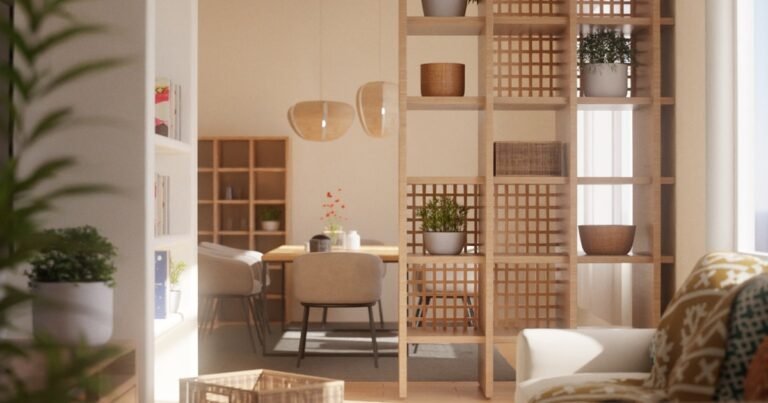
One or two sealed wood shelves ($40–$90 each) replacing a run of upper cabinets add both storage and warmth. Style each shelf with no more than three or four objects, the wood grain itself is the decor, not a crowded surface on top.
4. Stoneware Canister Set
Matching unglazed stoneware canisters ($15–$45 for a set) replace mismatched plastic containers on the counter. Uniformity here does more for the room’s calm than almost any other single swap you could make this weekend, and it takes about ten minutes to arrange once everything’s unboxed.
5. Rattan Pendant Lighting
A woven rattan pendant shade ($40–$100) over an island or sink brings texture overhead without competing with countertop styling. Keep it well clear of the stove, natural fiber and open flame don’t mix.
6. Under-Cabinet Warm Lighting
Warm-white (2700K) LED strips under the upper cabinets add function and mood in one move. At Home Decor Beauty, we recommend this over pendant lights alone, layered light sources are what keep a kitchen from feeling like a showroom at night.
7. Slab-Front Cabinet Style
Flat slab cabinet doors, with or without visible pulls, are the cleanest-lined option and the current default for this style. If a full swap isn’t in budget, even replacing the upper cabinets alone captures most of the visual shift.

Countertop and Rental-Safe Japandi Kitchen Ideas
94% of updated cabinets now include specialty storage, pullout bins, tray drawers, spice organization, according to industry reporting on the NKBA 2026 Kitchen Trends Report, and hidden organization is exactly what makes visible clutter unnecessary. These six ideas work without touching a single cabinet.
8. Linen Tea Towels in Neutral Tones
Swapping printed cotton towels for plain linen ($10–$20 for a set) is the cheapest, fastest change on this entire list. Skip novelty prints entirely, solid neutral tones are what keep the palette calm.
9. Bamboo Utensil Holder
A single bamboo or wood utensil crock ($10–$20) replaces a plastic version and doubles as the counter’s one styled object. One holder, not two, duplicate items read as clutter fast on a small counter.
10. Removable Wood-Look Backsplash Panel
Peel-and-stick wood-grain panels ($25–$45 per section) behind the stove or sink add warmth without tile work. Test a small patch first, heat and steam near the stove affect adhesive differently than a dry wall.
11. One Ceramic Pendant Swap
Replacing a builder-grade overhead fixture with a single ceramic or paper pendant ($50–$120) changes the room’s whole character for the cost of one afternoon’s work. Most rentals allow simple fixture swaps if the original is kept for move-out.
12. Herb Shelf by the Window
A small shelf of potted herbs ($15–$30 total) brings the plant life japandi decor depends on directly into a functional spot. It’s genuinely useful, not just decorative, exactly the dual-purpose approach this style rewards.
13. Hidden Appliance Garage
A simple tambour or curtain panel ($30–$70) hiding the toaster and coffee maker in a corner nook clears counter space instantly. It’s the single fastest fix if your counters are the main thing fighting a calmer look.
How Do You Style a Japandi Kitchen on a Budget?
In 2025, 28% of Americans trimmed decorating budgets and 37% kept total seasonal spending under $100, per a Rocket Mortgage survey, and japandi’s clear-the-counters philosophy is arguably the cheapest kitchen style to adopt. Our budget decor section runs on the same restraint.
Under $50 (Ideas 14–15)
Idea 14 is a linen towel and bamboo utensil holder pairing, around $25–$35 together. Idea 15 is decluttering the counter down to three items, completely free, and arguably the single highest-impact move in this whole guide.
$50 to $200 (Ideas 16–17)
Idea 16 combines a ceramic pendant swap with matte black hardware, about $80–$150 together. Idea 17 is the peel-and-stick backsplash panel behind the sink, roughly $30–$60 depending on wall size.
$200 and Up (Idea 18)
Idea 18 is the cabinet-front refresh: wood-front panels on the upper cabinets plus new hardware throughout, $400–$600 assembled in 2026. Even at the top of that range, it lands well under the $28,000–$30,000 typical cost of a full minor remodel.
How Do You Layer a Japandi Kitchen Like a Pro?
With minor kitchen remodels delivering 112.9% ROI, the strongest of any interior project (Zonda, 2025), even a decor-only refresh pays off in daily use if not resale math. Here’s the progression that gets there without wasting a purchase.
Beginner: One Afternoon, Under $50, Renter-Safe
Clear the counters to three items, swap in linen towels, and add a bamboo utensil holder. No purchase larger than a towel set required, and the room already reads calmer.
Intermediate: One Weekend, $150 to $400
Add matte black hardware, one open wood shelf, and a ceramic pendant. Layer materials in threes, wood, ceramic, natural fiber, before adding anything patterned.
Professional: $400 and Up
Swap the cabinet fronts to wood panels, add under-cabinet lighting, and finish with a stoneware canister set. That said, plenty of $150 kitchens outshine $600 ones, clearing the counters still matters more than any single purchase, and it’s the one step nobody skips twice once they’ve seen the difference for themselves.

How Is a Japandi Kitchen Different from a Scandinavian Kitchen?
The two styles overlap so heavily that kitchen showrooms often blur them together, but the differences matter once you’re choosing actual cabinets and finishes. A Scandinavian kitchen leans lighter and cooler, think pale birch, crisp white walls, and the occasional pastel accent tile. It photographs bright and airy, almost clinical in the best examples.
It keeps that same functional, uncluttered layout but pulls the palette warmer and deeper. White oak replaces pale birch. Matte black or bronze hardware replaces polished chrome. The overall feeling shifts from bright Nordic morning to quiet evening calm, still minimal, but never cold.
The easiest test while shopping: if a cabinet sample looks equally at home in a sun-filled Copenhagen apartment, it’s leaning Scandinavian. If it reads warmer, quieter, and slightly more shadowed even under bright light, that’s japandi, and that’s the target every idea in this guide is built around.
What Mistakes Ruin a Japandi Kitchen?
Even good ideas fail on execution. The five mistakes we see most, each with a one-sentence fix:
- Leaving every appliance out on the counter. Fix: store anything used less than daily in a cabinet or appliance garage.
- Mixing too many wood tones. Fix: pick one dominant wood tone for cabinets and let metal or stone provide contrast instead.
- Cool-white lighting under warm cabinetry. Fix: switch to 2700K bulbs, no wood tone survives a 4000K overhead light.
- Colorful or patterned dish towels and mats. Fix: replace with solid neutral linen or cotton, pattern breaks the calm fast.
- Unsealed wood near the sink or stove. Fix: seal every wood surface that touches water or heat, and reseal yearly in heavy-use kitchens.
Japandi Kitchen FAQ
The questions readers ask us most, answered with data where we have it.
Will japandi kitchens still be popular in 2026?
Yes, light wood stains overtook white as the top cabinet finish for the first time in nine years, and 59% of kitchen professionals say wood grain cabinetry is growing in popularity, according to NKBA’s 2026 Kitchen Trends Report. The style is expanding, not fading.
What is the fastest way to get this kitchen look?
Clear the counters down to three or four items and swap in solid linen towels, both changes cost little to nothing and take under an hour. Cabinet-level changes matter more long term, but decluttering delivers the most visible shift per minute spent.
How much does a japandi kitchen refresh cost without remodeling?
A full decor-only refresh runs $400 to $600 in 2026, well under the $28,000–$30,000 typical cost of a minor kitchen remodel. Minor remodels do recoup about 112.9% of cost at resale (Zonda’s 2025 Cost vs. Value Report), but a decor refresh delivers most of the visual change for a fraction of the price.
What wood is best for japandi kitchen cabinets?
White oak leads professional specifications at 51%, typically finished in a light-to-medium stain rather than dark or high-gloss, per NKBA data. Walnut works as a single darker accent, but mixing more than two wood tones breaks the calm the style depends on.
Is a japandi kitchen practical for everyday cooking?
Yes, arguably more practical than cluttered alternatives, 94% of updated cabinets now include specialty storage like pullout bins and tray drawers, according to industry reporting on NKBA’s research. Hidden organization is what makes the visible calm of a japandi kitchen actually livable.
A Kitchen That Breathes
Clear the counters, warm the wood, edit the metal. That’s the whole method:
- Counters first: negative space is the decor, not the absence of it.
- One wood, one metal: pick both and let everything else support them.
- Texture over pattern: linen, stoneware, and wood grain do the visual work.
So which move starts your kitchen, the counter declutter that costs nothing tonight, or the cabinet swap everyone will notice? Once the kitchen is styled, carry the palette through the rest of the house with our japandi furniture ideas. At Home Decor Beauty, we cover everything you need to know about decor styles, from a $15 towel swap to a full cabinet refresh.
Home Decor Beauty covers everything you need to know about decor styles, room ideas, budget finds, seasonal decorating, DIY projects, and party decor. Explore our full library at homedecorbeauty.com.
Sources: NKBA, “KBIS Releases Annual 2026 Kitchen Trends Report,” retrieved 2026-07-18, https://nkba.org/press/nkba-kbis-releases-annual-2026-kitchen-trends-report/; Zonda, “2025 Cost vs. Value Report,” retrieved 2026-07-18, https://zondahome.com/2025-cost-vs-value-report/; Rocket Mortgage, “Americans Are Spending Less on Holiday Decor and Gifts,” 2025, retrieved 2026-07-18, https://www.rocketmortgage.com/learn/americans-are-spending-less-on-holiday-decor-gifts.