Home Decor Styles: 10 Simple Looks for a Happy Home
You like a few rooms you see online, but you cannot say why, and every shop sorts its stock under a different label. That is the real problem with home decor styles: the names are fuzzy, the photos overlap, and it is easy to buy a lamp that fights your sofa.
This guide sorts the main home decor styles into 10 clear looks. For each one you get the colors, the materials, a realistic starting budget and one easy move, so you can choose a direction and stop second-guessing every purchase.
Table of Contents
Table of Contents
What Are the Main Home Decor Styles?
Most home decor styles are variations on a few ideas: clean and modern, warm and traditional, or relaxed and layered. House & Home groups the popular looks into seven families, including Scandinavian, mid-century modern, bohemian, industrial, shabby chic, modern urban and farmhouse, as described in its guide to popular decor styles. Longer lists, like the 25 types in this Mixtiles guide, add coastal, Japandi and grandmillennial.
You do not need all of them. The ten below cover most of what people actually search for, grouped by mood. Read the group that sounds like your ideal evening, then look at the individual looks inside it.
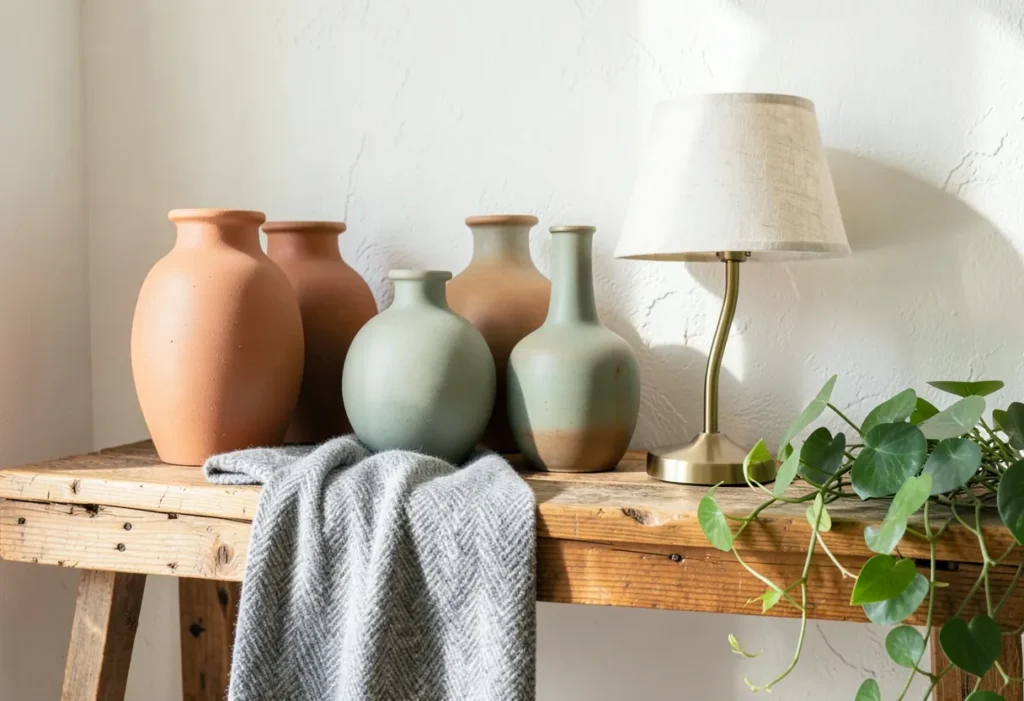
Calm and Clean Home Decor Styles for Quiet Rooms
If clutter makes you tense, start here. These home decor styles reward empty surfaces and a small number of good pieces.
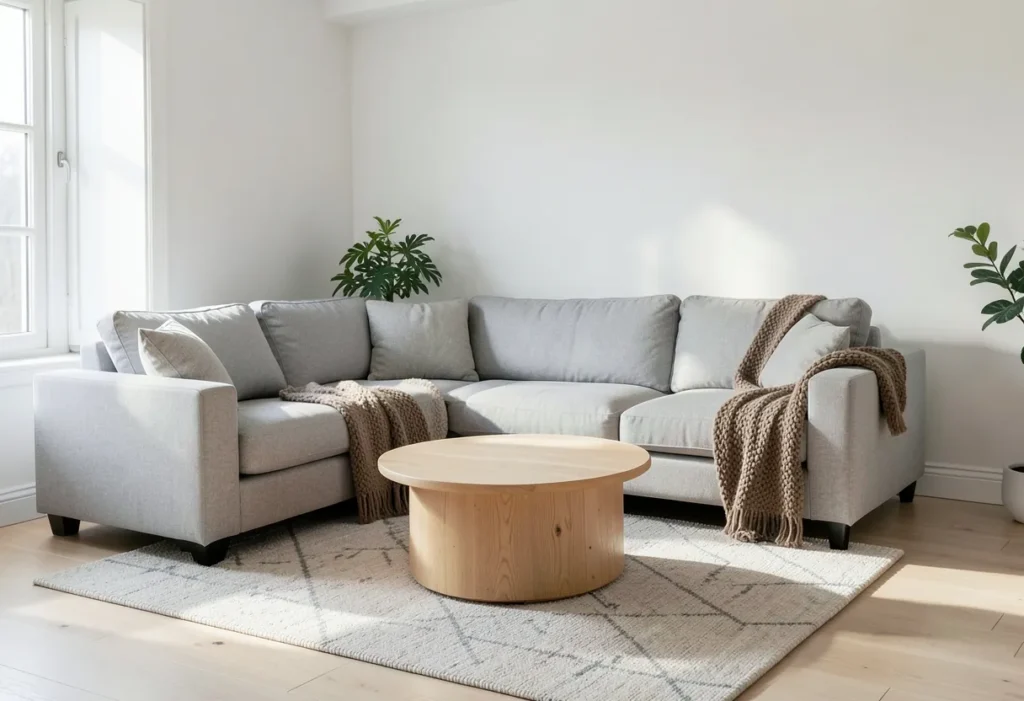
1. Scandinavian
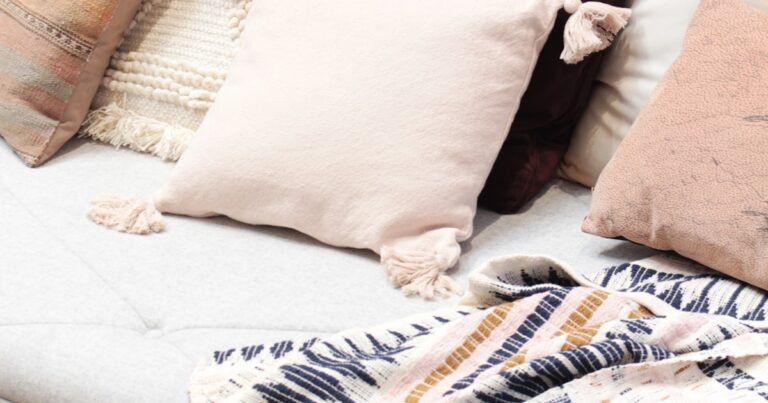
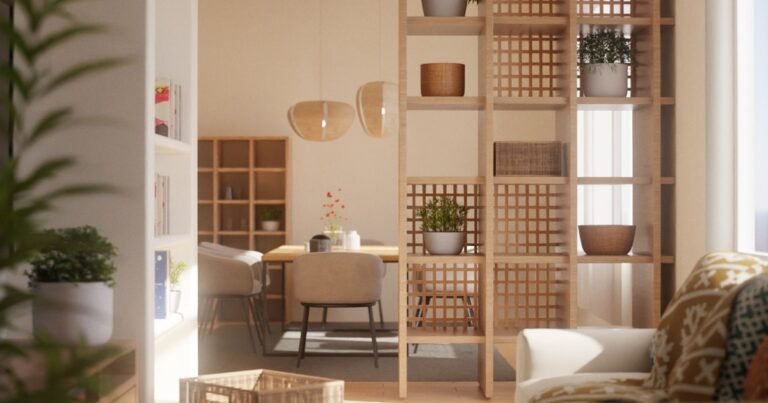
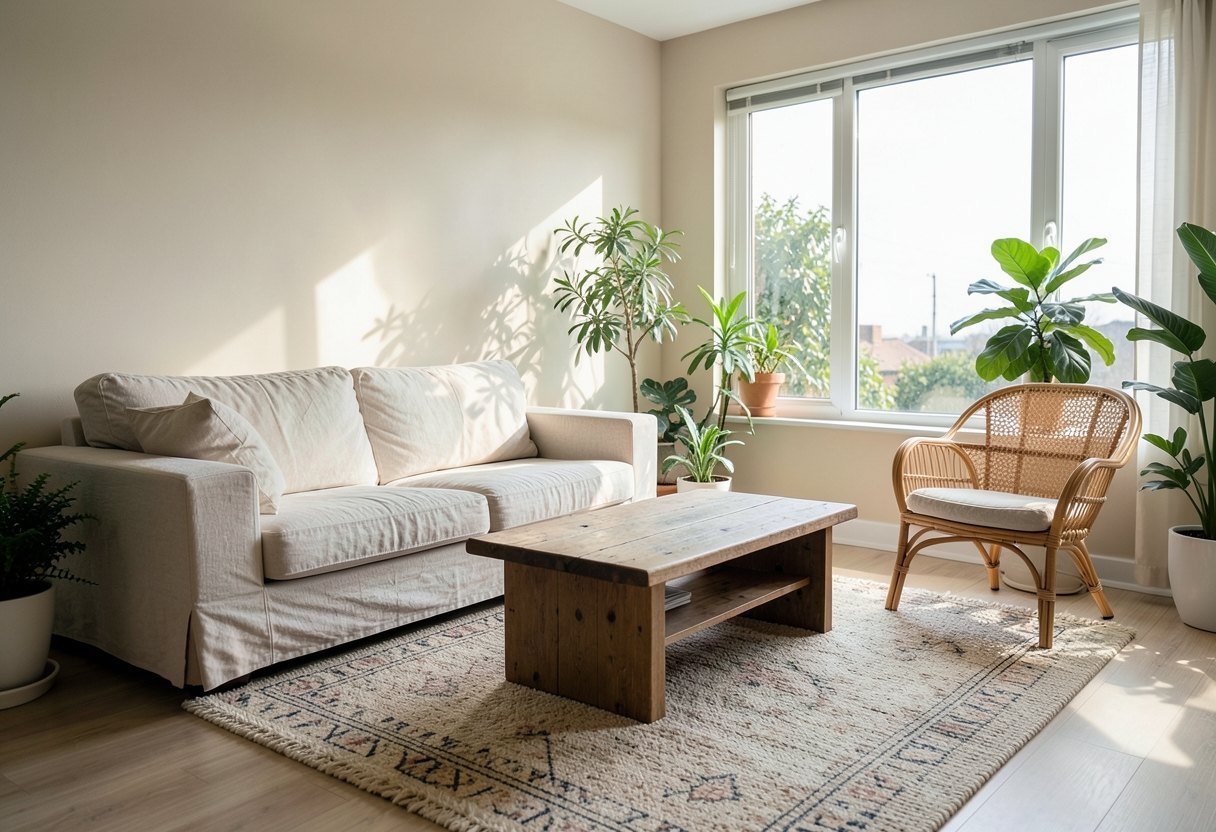
Scandinavian decor is built on light walls, pale wood, soft textiles and a few green plants. Whites, greys and gentle neutrals dominate, and texture does the work that color would do elsewhere: a chunky knit throw, a wool rug, a linen curtain. A good Scandinavian room has one purpose for every object.
Easy move: swap dark curtains for sheer white ones and keep the windowsill clear. Starting budget is about $150-300 for textiles and a rug at big-box stores.
2. Japandi
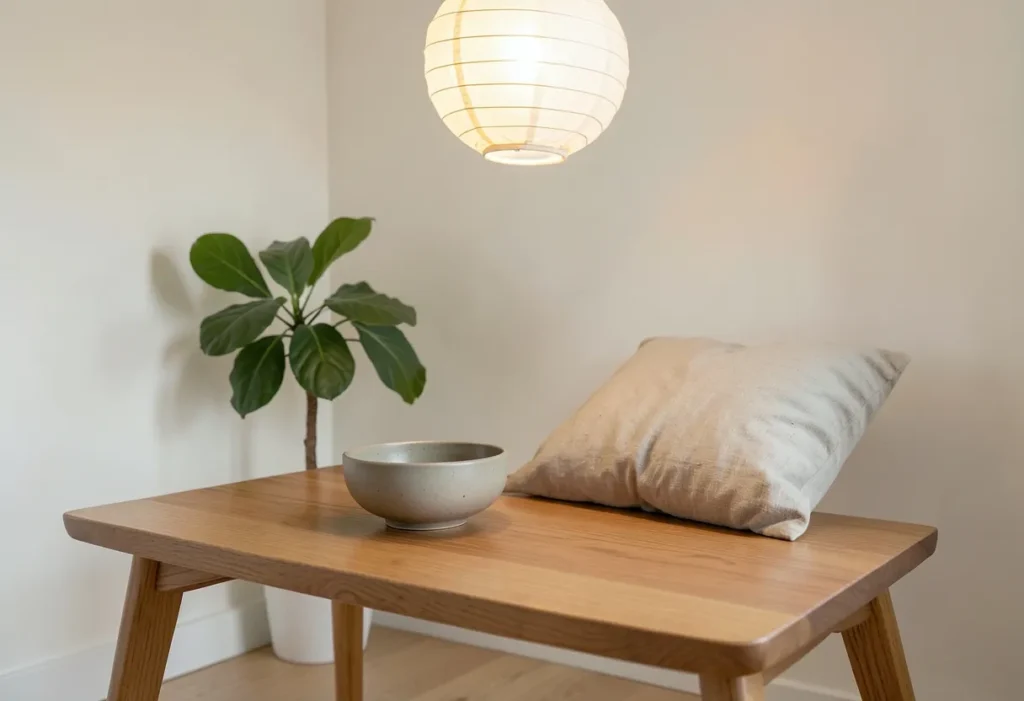
Japandi blends Japanese restraint with Nordic warmth. Think low furniture, natural wood, matte ceramics and a muted palette of oatmeal, charcoal and sage. It is quieter and a little darker than Scandinavian, and it favors handmade imperfection. Our guides to Japandi furniture and the Japandi rug show how to build it piece by piece.
Easy move: add one wide, shallow ceramic bowl on a low table. Starting budget is about $200-400.
3. Modern Minimalist
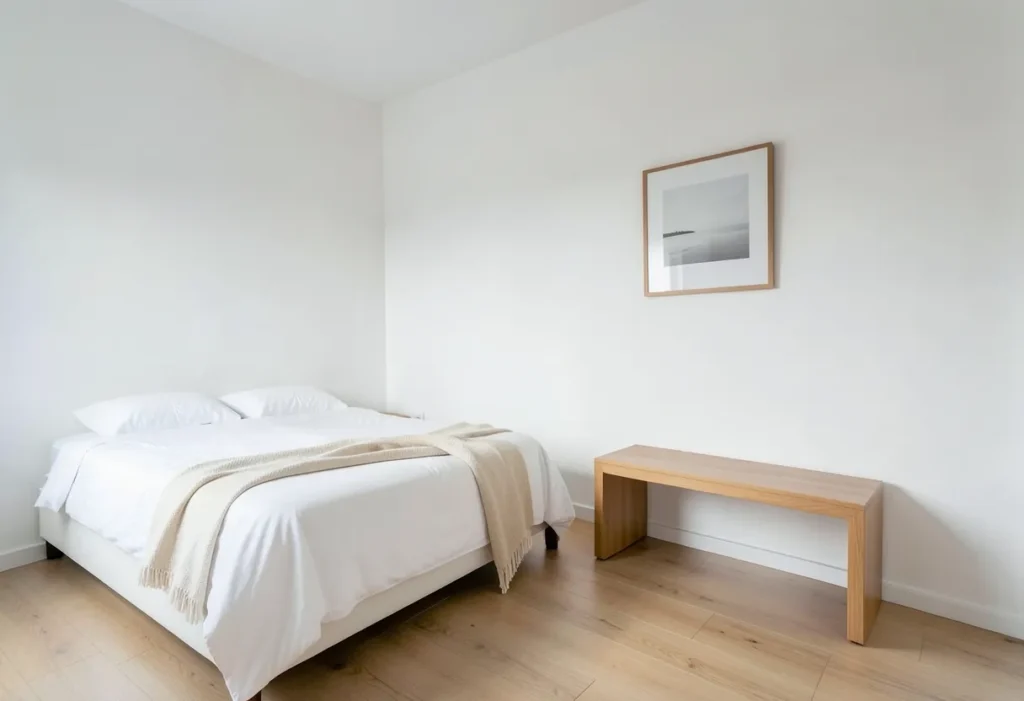
Minimalist rooms use clean lines, simple shapes and soft colors with almost no ornament. Metal, glass and smooth wood are the usual materials. The risk is a cold room, so keep one warm element, such as a wood bench or a cream wool throw, in view.
Easy move: clear every surface, then return only three items per surface. This one is nearly free to start, and the budget goes to a single good sofa.
Warm and Layered Home Decor Styles With Personality
If you want your house to look lived in and loved, these home decor styles let you collect things over time instead of buying a set.
4. Bohemian
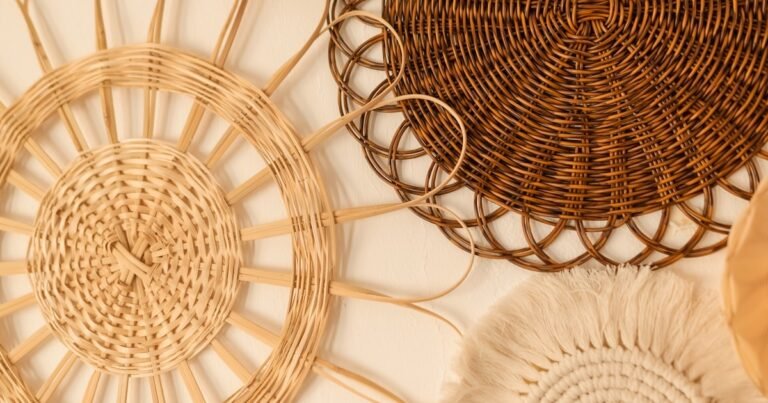
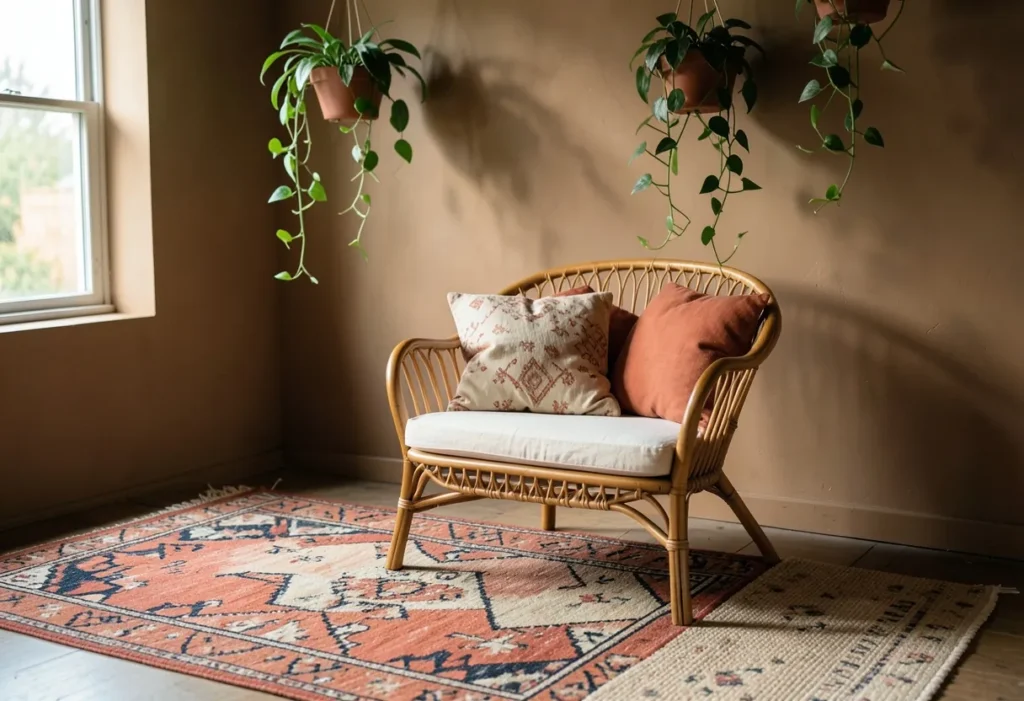
Bohemian rooms are relaxed and layered: patterned rugs, mixed textiles, rattan, plants and art from different places. The trick is a limited palette, such as terracotta, cream and deep green, so the pattern feels rich instead of messy. Our posts on boho wall decor and boho decorative pillows cover the layering rules in detail.
Easy move: stack two rugs of different sizes. Starting budget is about $100-250 if you shop thrift stores.
5. Mid-Century Modern
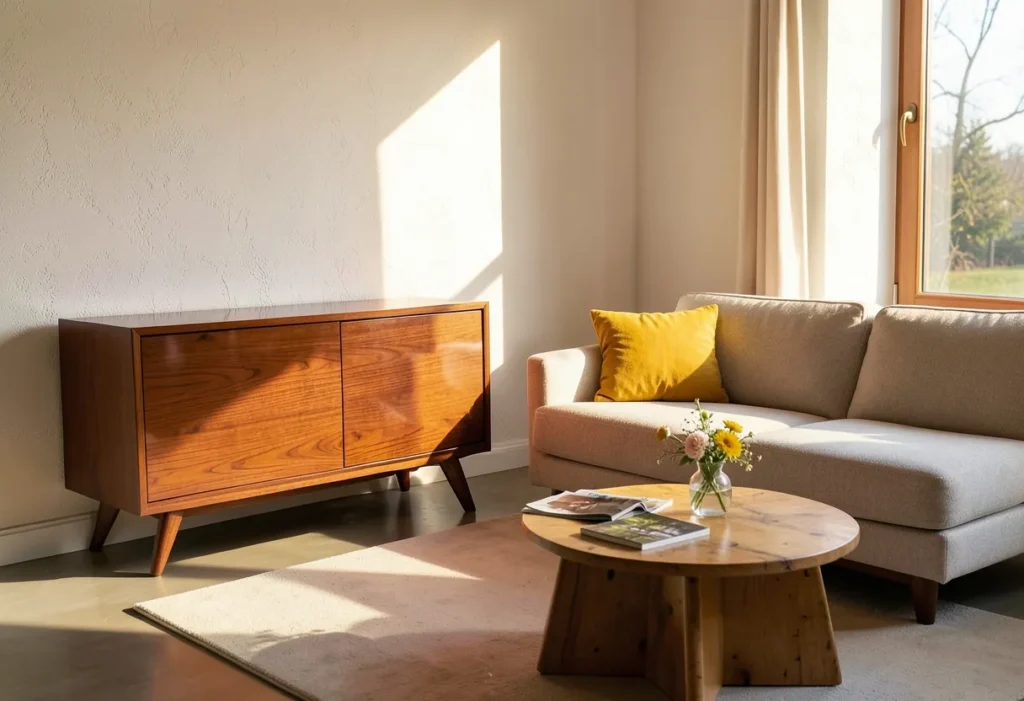
Mid-century modern draws on 1950s and 1960s design: tapered wooden legs, curved lines, earthy tones and bold accents in yellow, orange or red. One authentic walnut credenza can anchor a whole room. See how to add the look with mid-century modern decorative pillows, thrifted or new.
Easy move: add one mustard or burnt orange accent chair or pillow. Vintage pieces vary widely, so plan about $150-600 for a first statement item.
6. Cottagecore
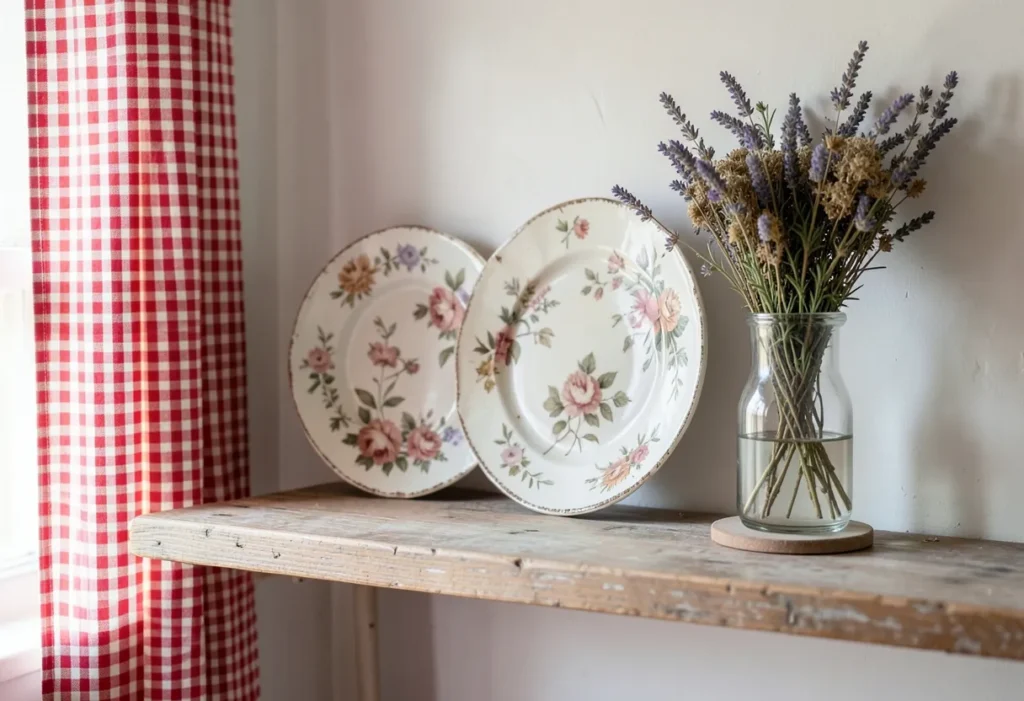
Cottagecore borrows from English cottages: soft florals, vintage china, gingham, dried flowers and worn wood. It is the most forgiving of the warm home decor styles because secondhand pieces suit it perfectly. For a small space, our cottagecore room decor guide shows what to keep and what to skip.
Easy move: group three mismatched vintage plates on a wall. Starting budget is about $30-80 from thrift shops.
Earthy Home Decor Styles Built on Texture
These home decor styles lean on natural materials and honest surfaces rather than color.
7. Rustic
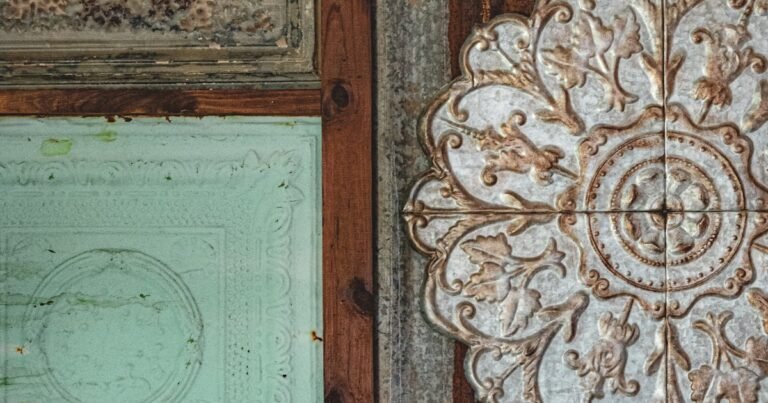
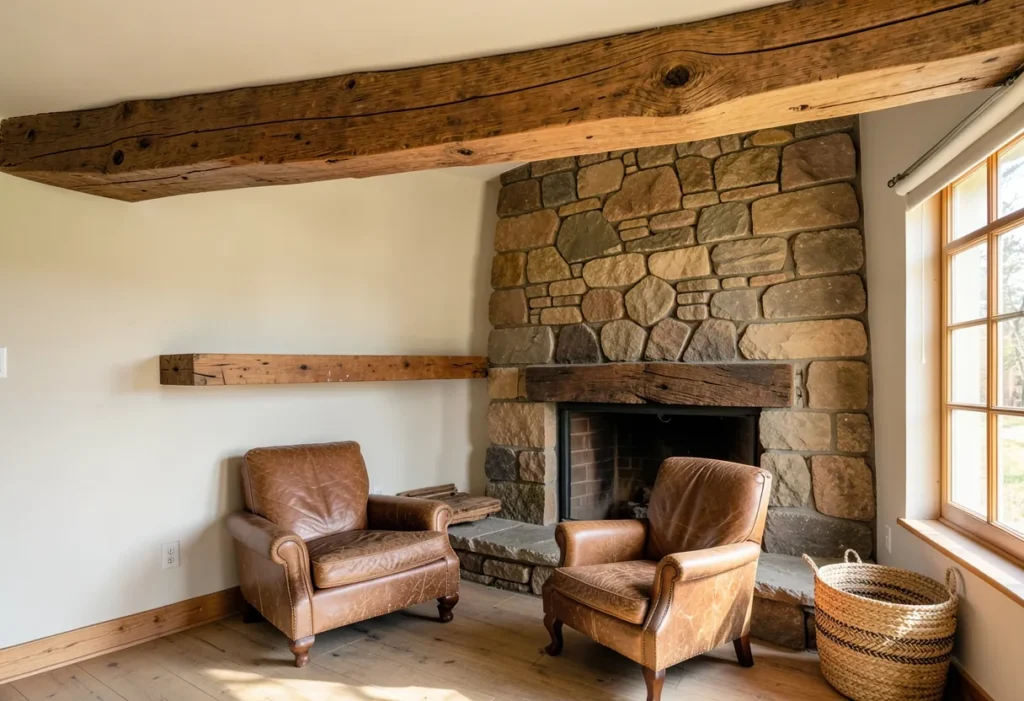
Rustic style puts nature first: raw wood beams, stone, iron, leather and woven baskets. Colors stay in browns, creams and forest greens. Use rough textures sparingly, one or two per room, or the space turns heavy. Our rustic wall decor guide sorts the options by budget tier.
Easy move: hang one reclaimed wood shelf. Starting budget is about $40-120.
8. Farmhouse
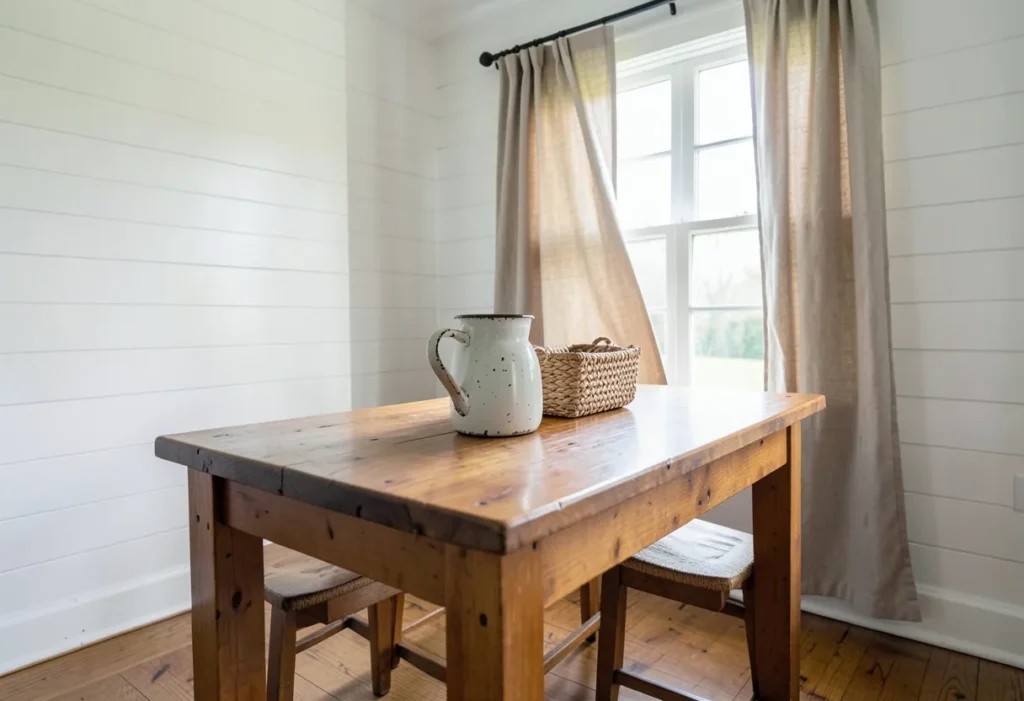
Farmhouse is traditional decor with a modern twist: mostly neutral walls, plenty of wood, practical furniture and small pops of color. Think a white shiplap wall, a wooden dining table, enamel pitchers and a basket by the door. It is friendlier than rustic and brighter in tone.
Easy move: replace a mirror frame with a plain wood one. Starting budget is about $100-250.
9. Industrial
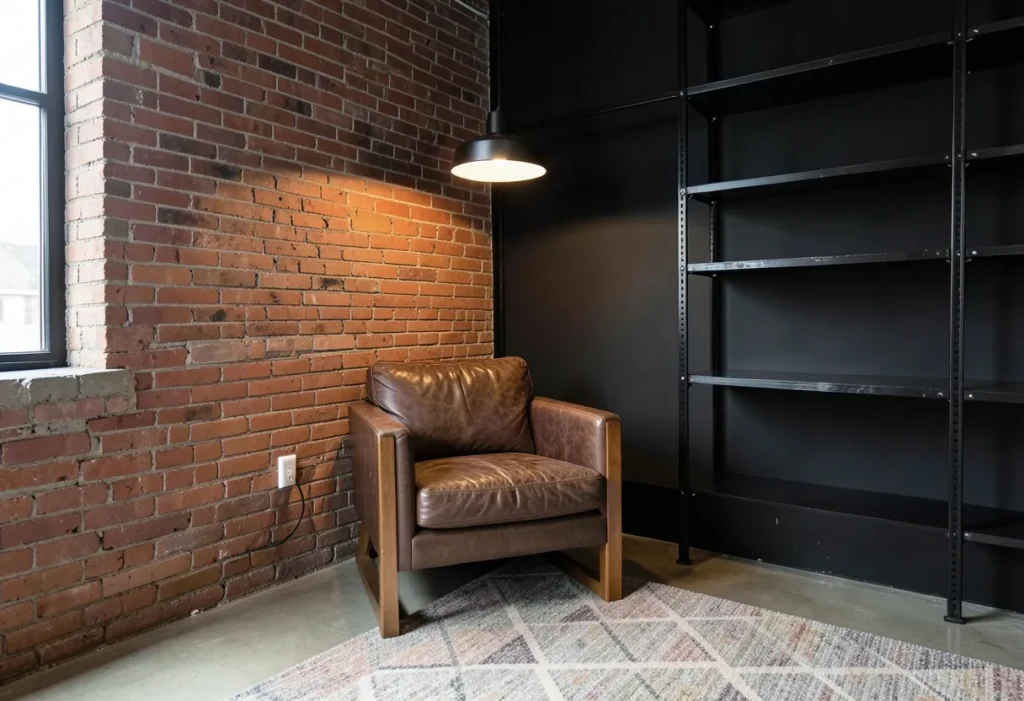
Industrial style borrows from lofts and warehouses: exposed brick, metal shelving, black frames, concrete and leather. It pairs well with other looks, which is why many people use it as an accent rather than a full theme. Warm it up with wood and a soft rug.
Easy move: switch to black metal light fixtures. Starting budget is about $80-200.
10. Coastal
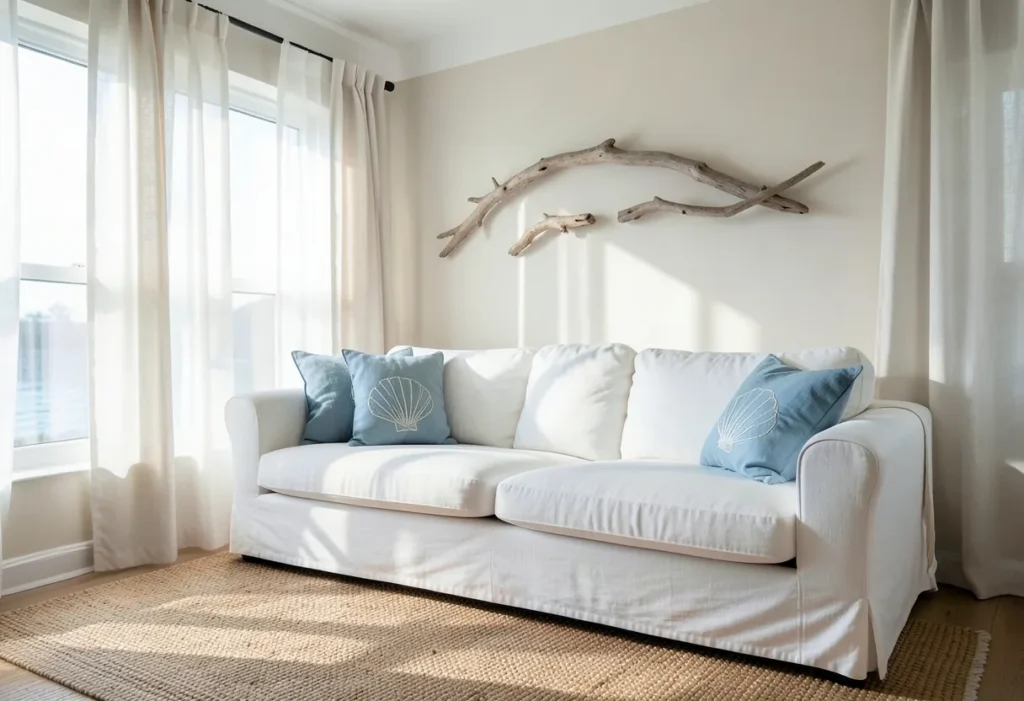
Coastal rooms are airy and sun-washed: white and sand walls, soft blue accents, jute rugs, driftwood and linen. The point is light and breathing room, not seashell clutter. One large natural piece beats ten small souvenirs.
Easy move: hang a single driftwood or woven piece above the sofa. Starting budget is about $60-150.
Home Decor Styles by Budget and Room
Budget changes how you start, not which of the home decor styles you can have. Under $100, work with paint, textiles and thrifted accessories: cottagecore, boho and rustic are the most forgiving here. Between $100 and $500, one good rug, one lamp and a few frames can set up Scandinavian, Japandi or coastal. Above that, spend on a single statement piece, such as a mid-century credenza or a solid wood dining table, and keep everything else simple.
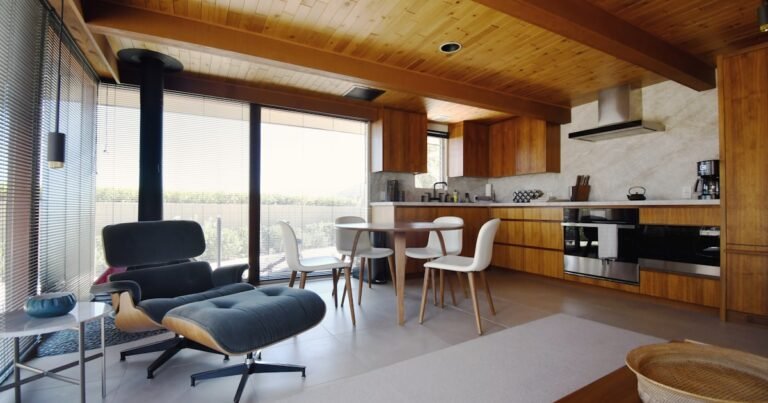
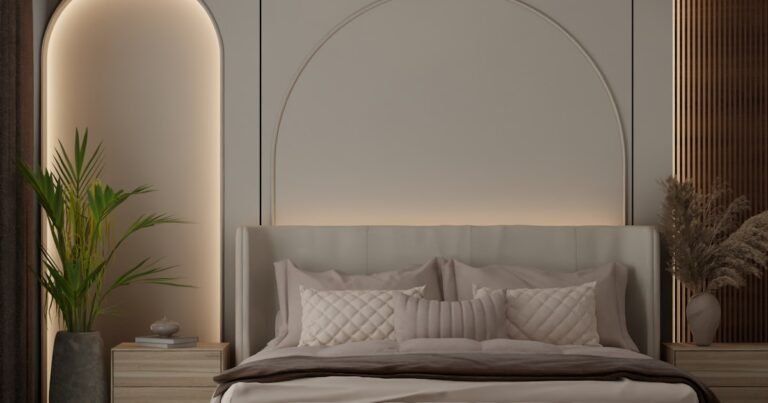
Room size matters too. A bedroom benefits from soft home decor styles because the goal is rest: Scandinavian, Japandi or coastal. A living room can carry more personality, so boho, mid-century and farmhouse all work. Kitchens and dining areas suit farmhouse and industrial because wood, metal and enamel stand up to daily use. Entryways are small, so borrow one idea from any style and repeat it, such as a woven basket, a brass hook or a wood bench.
If you enjoy making things, many of these looks can be built by hand. A textured canvas is a good first project, and this easy textured canvas tutorial shows the steps in a few minutes. Handmade art also makes any of the ten home decor styles feel less like a catalog.
How to Pick Between Home Decor Styles in One Weekend
Choosing among home decor styles gets easy once you stop looking at whole rooms and start looking at your own habits.
- Save 15 photos of rooms you like. Count the repeated colors, materials and shapes.
- Write down the three words that appear most, such as “light”, “wood” or “layered”.
- Match those words to the ten looks above. Most people land on one main style and one secondary style.
- Check your home. Low ceilings and small windows suit light, simple home decor styles. Big rooms with character can carry rustic, industrial or boho.
- Buy one anchor piece first, then build around it.
Keep a rule of thumb: spend more on what you touch daily, like the sofa and bed, and less on trends like wall art and accessories.
Can You Mix Home Decor Styles Without a Mess?
Yes, and most real homes do. The guides agree that styles can be combined, and the safest formula is 70 percent one main style, 20 percent a second, and 10 percent a wild card. Scandinavian plus boho works because both love texture. Industrial plus farmhouse works because both love wood and metal. Rustic plus coastal works if you keep the palette pale.
What keeps mixed home decor styles from looking random is repetition. Repeat one color three times and one material three times across the room, and the eye reads a plan.
Home Decor Styles Questions Readers Ask
What is the most popular of the home decor styles right now?
Scandinavian, farmhouse and modern minimalist remain the most searched, while Japandi and cottagecore keep growing. Popularity matters less than whether you will still like the room in five years.
How do I find my own style among so many home decor styles?
Collect photos of rooms you like and look for repeated colors, materials and shapes. The pattern in your saves is your style, whatever it is called.
Which home decor style is cheapest to start?
Cottagecore and boho are the cheapest because thrifted and vintage pieces fit them perfectly. Minimalist is cheap to start too, since it asks you to own less.
Can small rooms handle strong home decor styles?
Yes, if you choose light colors and few pieces. Scandinavian, Japandi and coastal suit small rooms best. Dark, heavy looks such as industrial work better as accents.
Do I need to buy new furniture to change my style?
Not at first. Changing textiles, lighting and wall art shifts a room’s mood quickly, and you can replace large furniture later as budget allows.
Your Style Is a Direction, Not a Rulebook
Home decor styles are useful labels, but a home that feels good is always a blend of what you own and what you love. Pick one anchor look, add one small move this weekend, and let the room evolve. For a next step, see how Japandi furniture differs from Scandi if you are torn between the first two looks.